
More external signals
Tariffs, schedules, fleet behavior, and higher-level objectives now influence thermal operation in ways that used to stay local.
Thermavyn helps teams define the boundaries, state handling, and safeguard logic that keep electrified thermal systems stable when power limits, external orchestration, and multi-domain control begin to interact.
Public materials stay high level. Sensitive implementation details are shared privately in the right context.
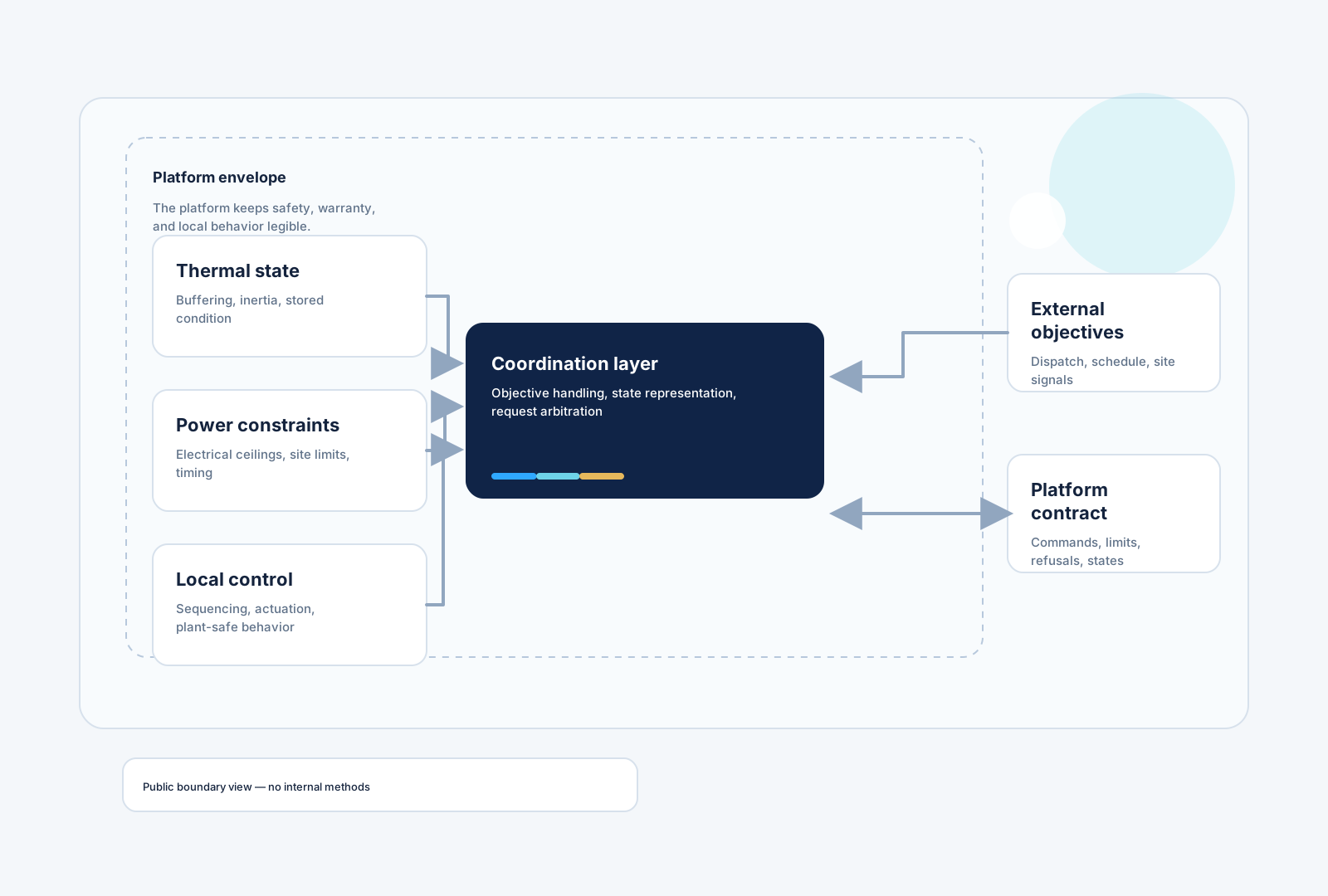
As electrified thermal platforms connect to site energy, constrained power, dispatch logic, and layered optimization, integration risk increasingly comes from unclear responsibilities rather than isolated component performance.
Tariffs, schedules, fleet behavior, and higher-level objectives now influence thermal operation in ways that used to stay local.
Buffered state, loop interaction, and transient behavior become expensive when they remain implicit.
Once coordination pressure rises, vague boundaries create internal friction, slower alignment, and avoidable platform risk.
Thermavyn is architecture-first. The work centers on platform envelopes, explicit state handling, responsibility mapping, and disciplined evolution over time.
Make guarantees, limits, refusal conditions, and safe operating boundaries explicit.
Treat thermal state, inertia, and transient interactions as governed system behavior rather than background noise.
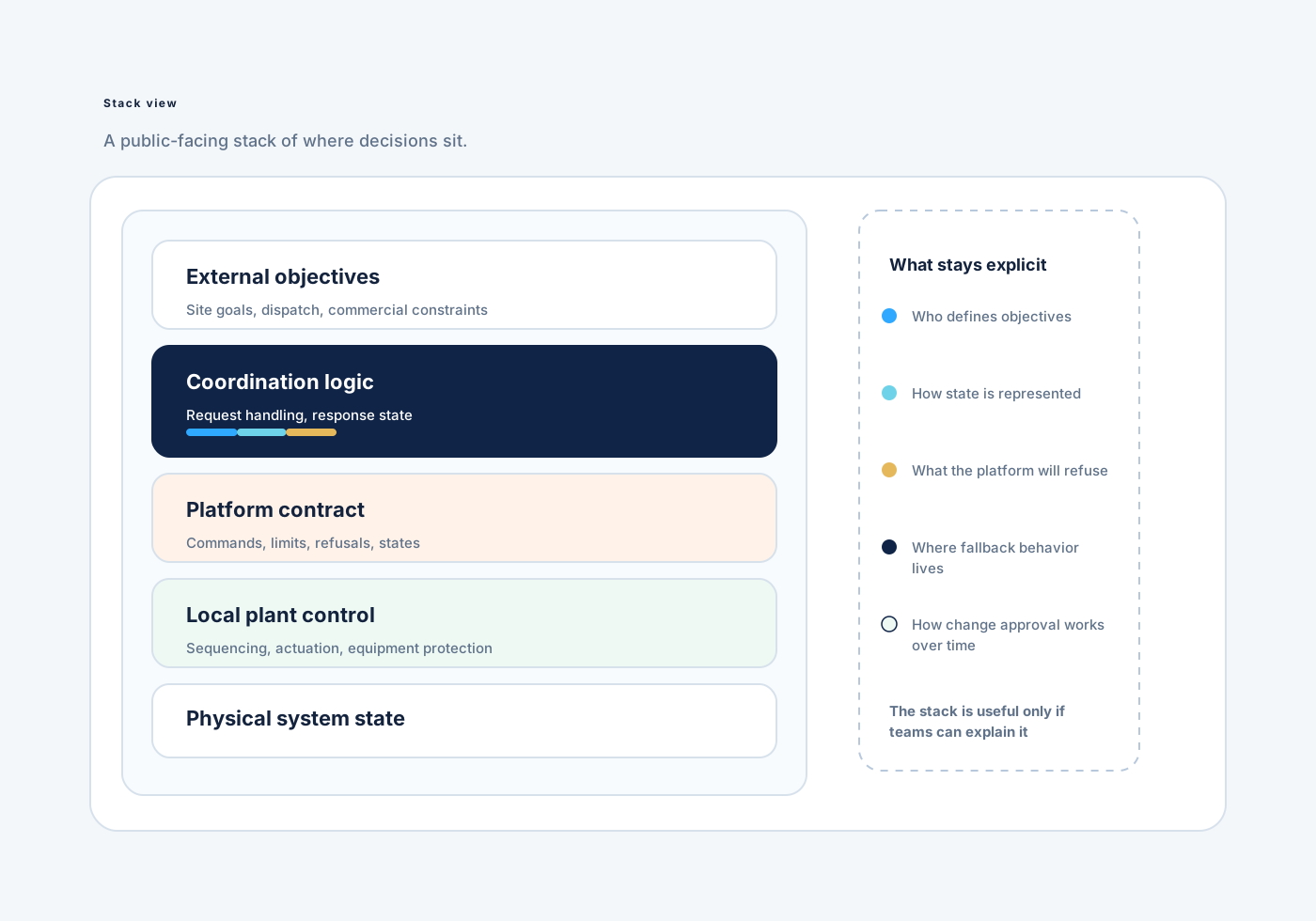
Separate objectives, requests, contracts, and local control behavior so the whole stack stays understandable.
Create an architecture that can evolve without quietly eroding platform integrity or maintainability.
Thermavyn does not start by replacing local control. It starts by clarifying the relationship between higher-level goals, platform contracts, and plant-safe behavior.
Objectives, schedules, market or site signals, dispatch requests, and broader system priorities.
The coordination layer decides what may be requested, what must be refused, and how state gets represented.
Local control, actuation, sensing, thermal behavior, and safety protections stay legible and protected.
The goal of the early process is clarity: quickly determine whether the platform, constraints, and decision model make Thermavyn relevant.
A focused conversation about platform type, coordination environment, and what needs to be evaluated.
Compare where the control problem is showing up: boundaries, state handling, interfaces, fallbacks, or OEM alignment.
Share the executive framing and deeper technical discussion materials appropriate for the context.
If the fit is real, define the most useful next layer of work rather than widening the conversation too early.
These pages are designed to make Thermavyn legible without disclosing implementation-sensitive details.
See the boundary view and stack view of the coordination layer.
Understand how Thermavyn approaches OEM fit without asking teams to erode platform integrity.
A sharper look at unmanaged system state, buffering, and why stability becomes architectural.