
OEM alignment path

OEM alignment without eroding platform integrity.

Thermavyn is designed to work with OEM architecture, service posture, and product boundaries - not to route around them. The objective is cleaner coordination, safer change, and clearer ownership.

Public scope

How Thermavyn approaches fit, decision ownership, and a disciplined path into deeper discussion.

Confidentiality posture

The first conversation can stay high level. More detail only follows when the fit is real.

Protect platform rules

Coordination should not quietly rewrite OEM assumptions about local behavior, warranty posture, or serviceability.

Clarify ownership

Be explicit about who owns objectives, state handling, interfaces, and refusal conditions.

Keep local control legible

Fast dynamics, transient response, and equipment protection stay close to the plant.

Stage deeper review

Move into private material only when the architecture fit and next step are clear.

Evaluation path

A lean path for deciding whether deeper work is justified.

Early conversations should reduce ambiguity quickly. Thermavyn uses a staged process that respects confidentiality while making fit visible.
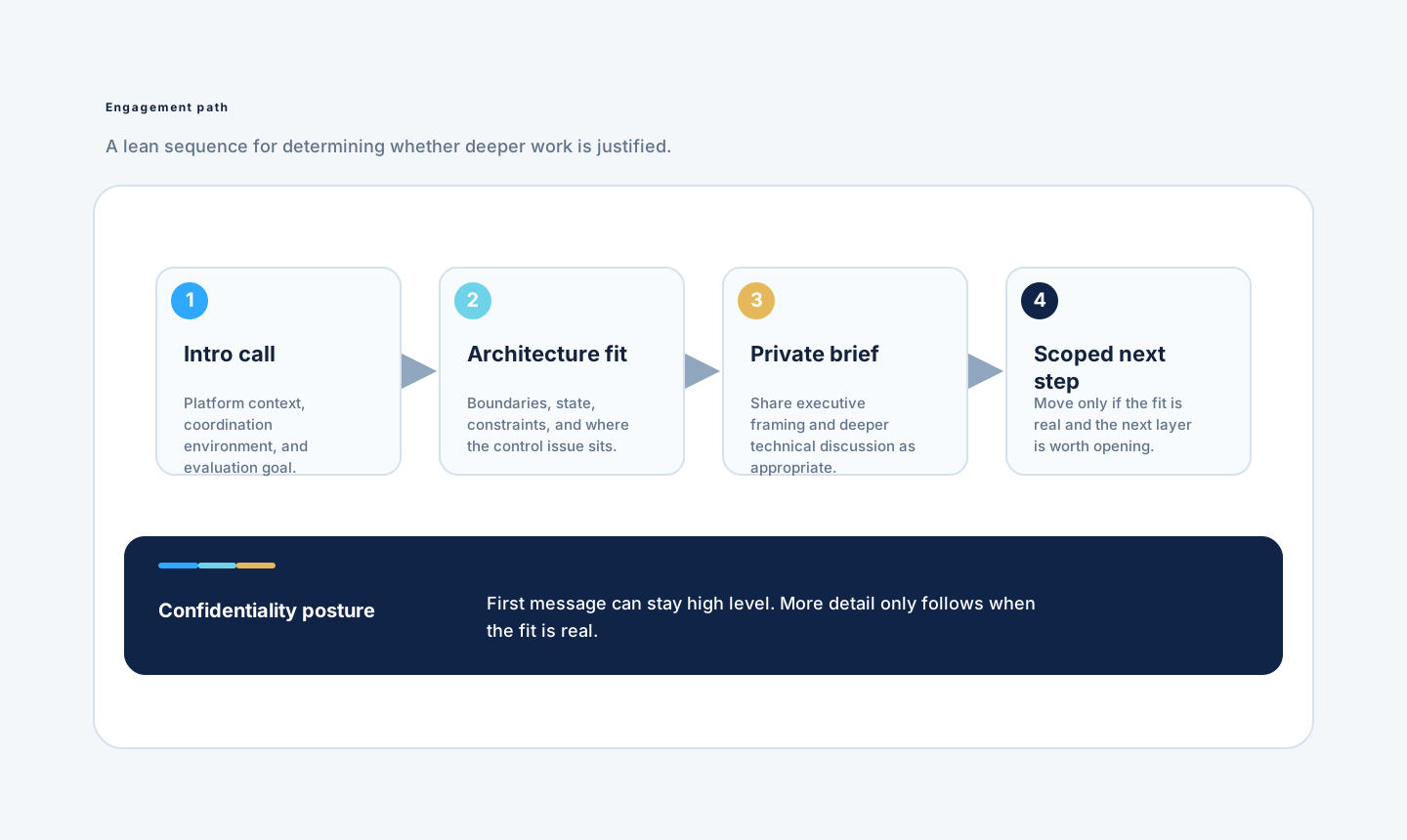
  • Start from platform context and what decision needs to be made.
  • Check where the real issue sits: boundaries, state, contracts, fallbacks, or OEM alignment.
  • Share the private brief only when the fit is credible and useful.
  • Define the smallest meaningful next step rather than widening the scope too early.
Engagement flow from intro call to architecture fit, private brief, and scoped next step.
A public-facing engagement path designed to keep the early process fast, serious, and confidential.
Typical alignment questions

These are the kinds of issues Thermavyn helps teams sort out.

Where should external requests terminate?

Not every objective belongs inside the platform. The boundary has to be explicit enough to survive integration pressure.

What must stay local?

Equipment protection, transient response, and plant-safe behavior usually need clear separation from higher-level orchestration.

How should change be approved?

A clean contract makes it easier to review new requests without quietly expanding risk or responsibility.

Does Thermavyn require sensitive technical disclosure to get started?
No. The first conversation can stay high level. Public materials exist specifically so teams can evaluate relevance before sharing implementation-sensitive information.
Is the goal to replace local control?
No. Thermavyn focuses on the coordination architecture above local actuation and within the platform boundary, not on casually pulling all intelligence upward.
Can Thermavyn support internal alignment as well as technical framing?
Yes. One of the main benefits of an explicit coordination architecture is that technical teams, decision-makers, and OEM stakeholders can discuss the same model clearly.
Private evaluation path

Start with the executive brief.

Thermavyn keeps public materials intentionally high level. A short private conversation is the fastest way to assess fit, compare architecture assumptions, and decide whether a deeper discussion makes sense.