
Invariants first
Start from what must remain true under stress before discussing optimization or orchestration.
A stable coordination architecture depends on platform rules that are explicit enough to survive integration pressure, change over time, and remain defendable inside an OEM environment.
Invariants, contracts, fallback posture, and how the architecture stays legible as complexity rises.
Specific methods, internal state logic, and implementation-sensitive material are discussed privately.
Start from what must remain true under stress before discussing optimization or orchestration.
Keep requests, guarantees, refusals, and status legible across the stack.
Define how the platform behaves when inputs degrade, objectives conflict, or conditions move outside the preferred operating regime.
Treat change control as part of the architecture so the platform can expand without turning fragile.
Coordination only becomes valuable when it fits inside the platform rather than silently working against it.
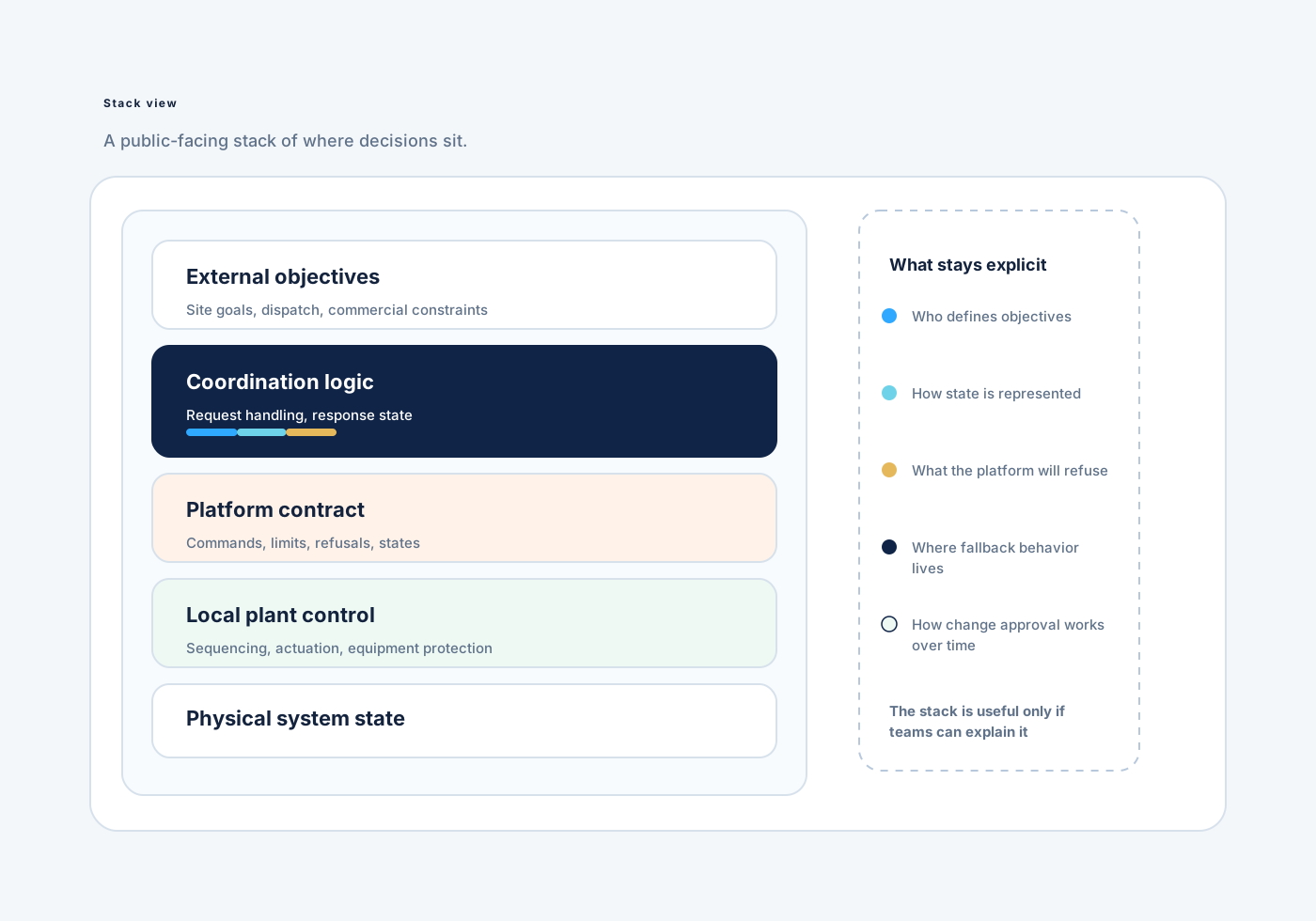
When boundaries and refusal conditions are clear, technical review, operations, and future expansion stop pulling the platform in incompatible directions.
Optimization or dispatch logic cannot quietly rewrite equipment behavior when the platform contract is explicit.
Teams can explain why a request is not allowed and what safe fallback behavior will occur instead.
New integrations can be evaluated against declared boundaries rather than accumulated assumptions.
A clear public description of where objectives stop and platform authority begins.
A stack view of who owns objectives, state representation, local behavior, and fallback posture.
A framework for evaluating new requests without eroding safety, maintainability, or OEM trust.
A good coordination layer makes platform behavior more legible, not more mysterious.