
Hidden state
If buffering and transient condition are not represented explicitly, the coordination layer will make bad assumptions about what the system can promise.
Once buffering, external objectives, and layered control begin to interact, the bottleneck is no longer just equipment capability. It becomes the architecture’s ability to represent state, reject unsafe requests, and evolve without hidden coupling.
A system can look capable on paper while still failing under real coordination pressure because the architecture does not know what the physical state means.
Thermavyn discusses implementation-specific state models and control methods only in the right confidential context.
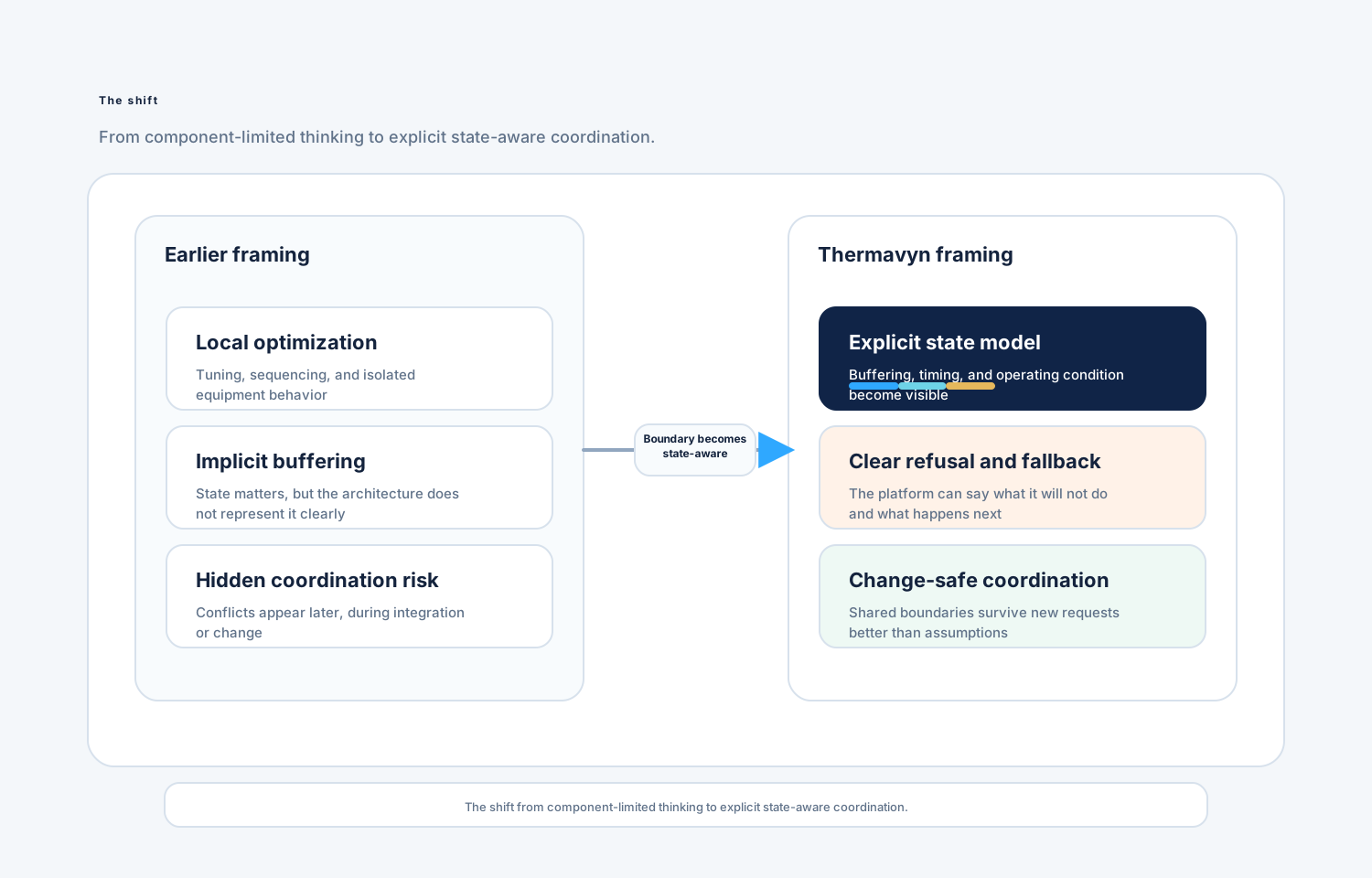
Thermal systems can tolerate a surprising amount of implicit behavior when they are isolated. They become much less forgiving when site power, schedules, dispatch, or fleet-level priorities start influencing what the system is expected to do.
If buffering and transient condition are not represented explicitly, the coordination layer will make bad assumptions about what the system can promise.
Without clear boundaries, higher-level requests and local control start to interfere in ways that are hard to diagnose and expensive to maintain.
Every new integration becomes riskier when the architecture cannot explain how state, refusals, and fallback behavior are meant to work.
A well-framed platform can coordinate more ambitiously because it is clearer about what it can observe, what it can guarantee, and what it will decline.