
The boundary between site objectives and plant behavior.
The layer that determines admissibility, arbitration, and how higher-level requests reach the platform contract.
Thermavyn defines the control boundary between site-level objectives and local thermal behavior, so electrified platforms can respond to power limits, schedules, and external orchestration without turning the system into a black box.
Public materials explain system role, boundary logic, and diligence fit. Algorithms, tuning strategy, and proprietary state handling stay private.
Thermavyn is not a pitch to bypass OEM control of the platform. It is a public explanation of the layer that decides what outside objectives may ask of an electrified thermal system and how that interaction remains safe, legible, and reviewable.
The layer that determines admissibility, arbitration, and how higher-level requests reach the platform contract.
Coordination only becomes strategic when equipment protection, warranty logic, and troubleshootability remain intact.
Explicit boundaries reduce ambiguity for product, controls, operations, and strategy teams at the same time.
Electrified thermal platforms increasingly operate under constrained power, site-level optimization, and layered objectives. Once that happens, the hard problem is no longer only component performance. It is whether the stack can state what it will do, what it will refuse, and why.
Electrical ceilings, tariff signals, and site constraints increasingly shape thermal behavior.
Thermal platforms are expected to respond to broader energy objectives, not just local setpoints.
Buffering, inertia, and loop interaction stop being background details once promises are made upward.
OEMs need architecture that survives technical review, service review, and future product evolution.
The public site is designed to clarify role and relevance without publishing a reproducible method.
The architecture starts by making clear what belongs above the platform, what belongs at the boundary, and what must remain inside local control.
Schedules, dispatch, site limits, tariffs, or broader operating objectives.
Admissibility, arbitration, state-aware request handling, refusals, and status.
Sequencing, actuation, fast dynamics, equipment protection, and plant-safe behavior.
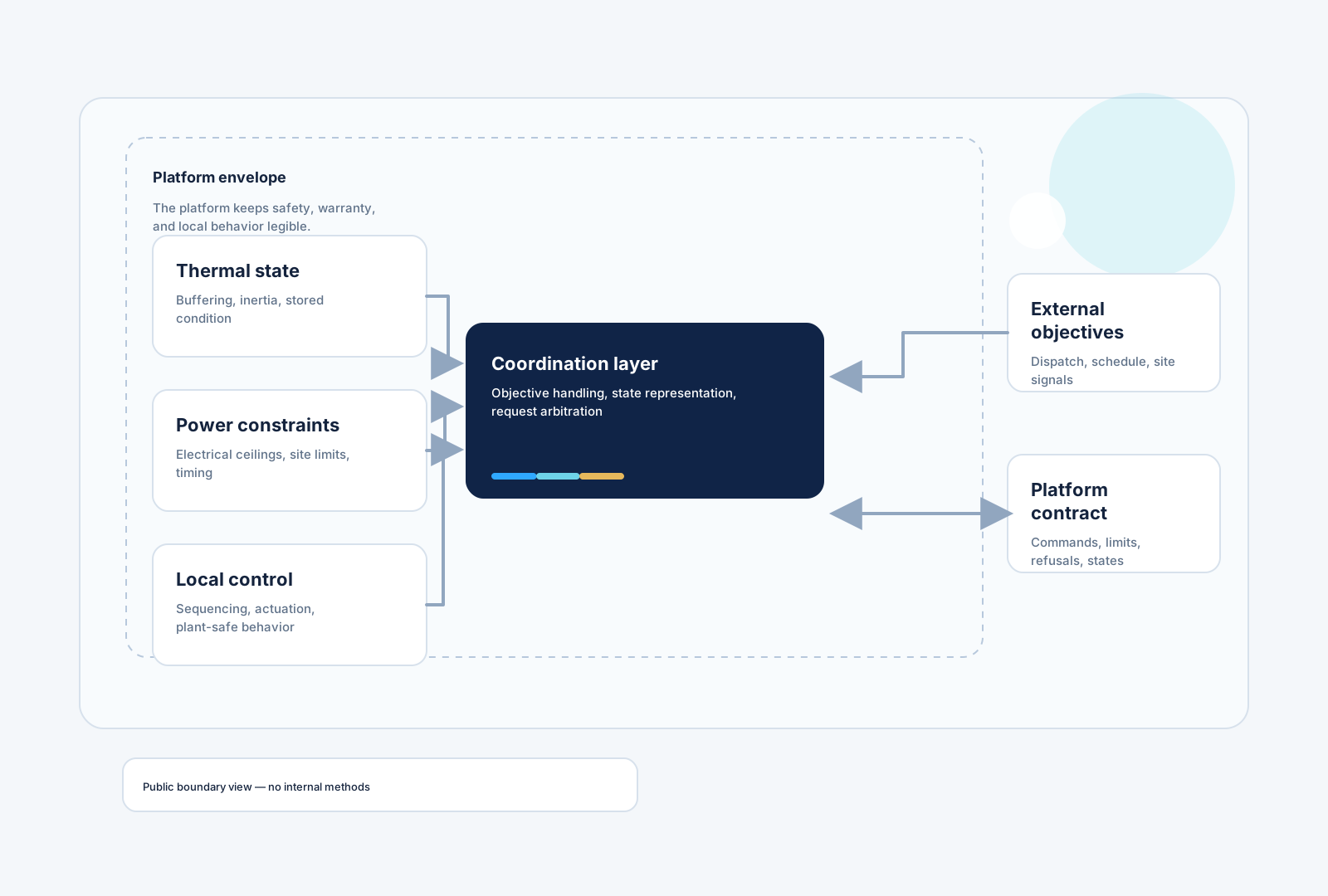
Thermavyn is structured so product, controls, operations, and strategy teams can evaluate the same architecture from their own responsibilities without the story changing between rooms.
Decide where coordination should stop and what the platform can promise safely.
Examine interfaces, state representation, refusals, and fallback ownership.
Protect troubleshootability, maintainability, and plant-safe behavior under real constraints.
Assess fit before widening disclosure or beginning a deeper diligence process.
The goal of early engagement is not to spray information. It is to establish whether the fit is real, what question needs to be answered, and what level of detail is justified.
Confirm platform type, coordination environment, and the decision being evaluated.
Determine whether the real issue is boundary definition, state handling, contracts, refusals, or OEM alignment.
Share deeper strategic framing and architecture assumptions only after relevance is established.
Open only the next layer required for a real decision, rather than widening the conversation by default.
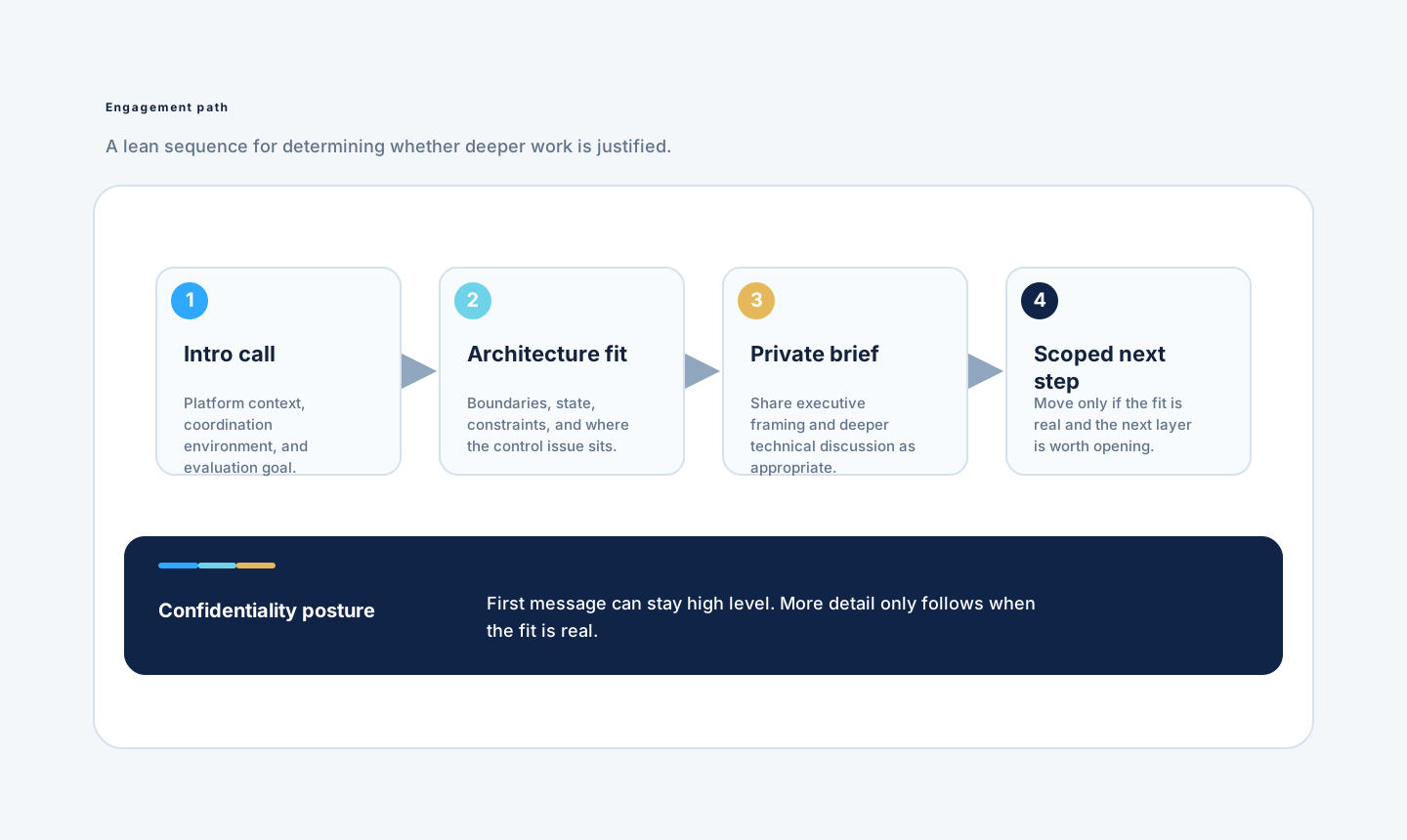
A short note about platform type, coordination environment, and what needs to be decided internally is enough for a serious first pass.